Saturday, August 7, 2010

Grow wild according to your nature ... Enjoy the land but own it not. .


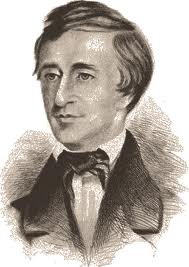
Henry David Thoreau

Henry David Thoreau was born in Concord, Massachusetts, in July 1817. This town lay some twenty-five miles inland from Boston andserved as a local market town.
As a boy Thoreau was often called uponto drive his mother's cows to and from their grazing pastures and developed an early love of solitude and communion with nature. Thoreau was subsequently supported by his older brother and sister, who were both schoolteachers, in being educated at Harvard. Whilst there Thoreau did not seem to be particularly academically brilliant he did; however, take on extra classes in science and in four European languages.After graduating in 1837 and into the early 1840s Thoreau was occupied as a schoolteacher and tutor. Thoreau actually took over management of Concord Academy in 1838 and subsequently introduced 
Bronson Alcott's progressive principles of education where physical punishments were abandoned and pupils wereencouraged to participate in classroom discussion.
A canoe trip in 1839 convinced Thoreau that he should not pursue a schoolteacher's career but should instead aim to become established as a poet of nature.Thoreau came to consider that he needed time and space to apply himselaswriterand on July 4th 1845 he moved to a crude hut that he had himself constructed and roughly furnished, using second-hand materials, on land recently purchased by Emerson alongside the northern shore of Walden Pond (which is actually more of a small lake than a pond) which lay a short way outside Concord. He lived there until September 1847 providing the bulk of his foodstuffs through the cultivation of beans, potatoes, peas, and turnips. He also atewild berries and apples. During this period Thoreau cultivated a tolerant relationship with local animal, bird,and fish life such that several individuals from these species came at his call, forgot their fear of man, and became tame and even affectionate.In 1846 Thoreau began writing about his experiences living relatively simply, and idyllically, in a roughly fashioned small house set beside a lake in his work "Walden". On page 69 we read:-
   "For more than five years I maintained myself thus solely by the labor of my hands, and I found, that by working about six weeks in a year, I could meet all the expenses of living. The whole of my winters, as well as most of my summers, I had free and clear for study."
  Thoreau's work is skeptical about the real benefits of long hours spent working and also skeptical about thereal benefits of economic development itself. For Thoreau it seemed that such development should be justified by having a clear moral or intellectual purpose.In 1854 Thoreau's "Walden" was published
Since these times "Walden" has been printed in over two undred different editions in English besides being translated into some fifty other languages for publication. It is said to have been an inspiration to such persons as Tolstoy, Gandhi, and Martin Luther King besides whilst also being an inspiration for environmentalism across the world.
In the second chapter entitled "Where I Lived, and What I Lived For," Thoreau wrote, "Men esteem truth remote, in the outskirts of the system, behind the farthest star ... In eternity there is indeed something true and sublime. But all these times and places and occasions are now and here. God himself culminates in the present moment ... And we are enabled to apprehend at all what is sublime and noble only by the perpetual instilling and drenching of the reality that surrounds us." By living intimately with nature at Walden, Thoreau hoped to attain to higher transcendental truth. 

Henry David Thoreau was only forty five years of age at the time of his death from Tuberculosis in May 1862.
Let us Go confidently in the direction of our dreams. Live the life way we have imagined.........Neelanjan


Friday, August 6, 2010

Cherkady way, a blend of Gandhian and Fukuokan principles


Cherkadi Ramachandra Rao was born in Kodagu in 1917. He was two when his father and mother died mysteriously within a day of each other. Then he moved to his older sister's house in Dharmasthala and later to Cherkady where another sister had been living.
Mr. Rao's life was shaped at Cherkady where he grew up grazing brother-in-law's cows and helping in his fields. He was sent to a school at the age of ten for two years.This formative years in school introduced Gandhi to Rao.
 His teacher Ramachandra Patil had only one subject, Gandhi. He always spoke of his life thoughts and also kept a charkha in the school.
Young Rao learnt to spin, there.Thus in his spare time Rao started spinning the charkha at home. In late teens, he came to Brahmavar to learn weaving and earned his first income at the age 22.
Soon he became an accomplished weaver and was also asked to look after the Khadi Board, Moodbidri.Pursuing the Cherkady way, a blend of Gandhian and Fukuokan principles of Masanobu Fukuoka, the architect of natural farming, Ramachandra Rao was instrumental in finding answers to many of the modern agricultural problems.
He was the recipient of many awards including “Krishi Pandit” given by the State Government in 2002-03.Having studied onlyup to standard III, though Cherkady did not read much about Gandhi, but understood deeply Mahatma's vision about life.
 Everyday until his death he worked and lived in simple imbibing Gandhian thoughts.In his two-and-a-half acre land given by his brother-in-law,the man has experimented with every possible crop from coconut trees, cashew nut, mango trees, ginger, papaya and vegetables.
The call given by Gandhiji to people to produce rice for themselves in 1948-49 when grain production dropped inspired Rao to resign from Khadi Board, Moodbidri and come to Cherkady with a mission to practise Gandhian ideology.
 Achrya Vinoba Bhave too had a great influence on Rao.His farming experiment made him discover that the plant grown out of natural nutrients yielded more than the usual variety. He began growing paddy without tilling the land or using other common farming practices without any irrigation.
The method named "Sarvodaya paddy cultivation" became popular in the area as the "Cherkady crop". The method is still considered suitable for hilly and dry areas.
 He also guided Namma Bhoomi, a charitable institution in Kundapur in experimenting with this method.However, he was also of the opinion that natural farming doesn't mean turning our backs on the scientific and modern world.
He understood that natural farming can find its true purpose only when it is backed scientifically.

Let his experiments of simple life and natural farming methods show the way to our farmers in shaping their life and future farming methods……Neelanjan


THE ONLY TRUTH I KNOW IS MY OWN EXPERIENCE

What I experienced as a blogger …….
There are surely many more +points and it would be great to hear what your experience as blogger-
.We spend lots of money on training and self-improving programmes, But here is the simple and very powerful tool which is easily and for free available to everyone. 
Go for it and your personal and professional qualities will flourish! Every day thousands of people join blogosphere. Blogging is not just something new. It is the new way of living for those  
Who choose that amazing way of expressing?  
Oneself and communicating with the world (online AND offline!). 
I have put together some points that might be attractive. Why? Because blogging in Many ways is the easiest  way of personality training: 
OUR BLOG IS OUR COACH. 
So what happens when we start blogging? What do gain gain? 
Determination -especially if our blog has a certain theme, 
You will want to keep collecting materials and posting good pieces on that. Even if it determination is not our strength, We will have to learn it. What is great about blogging in that this learning process happens naturally? 
In the flow. Our blog will teach you to follow your ideas
determinedly! 
Commitment - oh, that is a gold-value quality today, when more and more modern people avoid Committing themselves to any serous relationships. And blogging can become very serious 
Thus, our blog will be a good commitment trainer! 
Dedication- blogging needs lots of dedication in terms of time and attention  
(Our mind will be searching for new stories, new inspirations constantly). The question “What shall I post next” – will become same natural as “What will I eat for lunch?”. You may even quit some other activities Suddenly discover that it is more fascinating to make news our self rather than digest some propaganda. And, finally the essence of dedication is that it is done with the heart. 
You can only blog well if your heart is there. Your blog will open your heart! Sharing - even if our ordinal idea is some showing-off, 
We will land up sharing things for the benevolence of others. Otherwise who will read something of no use for anyone except of usOur blog will help you realize the essence of sharing! (If by chance we missed that quality before).Sustaining friendship  – that seem a bit of a problem for many. In the fast changing modern world people meet and then split, for various reasons. Having a blog, you will have a platform to meet your old and new friends.  
You will learn how to sustain the developing relationships  
With our readers and our self become a stemma-reader of your favorite blogs… The blogger-relationships are not any different from the any relationships offline, But here we will have a touch of something special, Some kind ofanonymous intimacy and trust… abit wired mix Our Blog will bring us waves of new, fascinating people to meet and to make friends with! 
We become the ACTIVE participator of the collective thinking. We become more sensitive to the information in general  
And more or less independent from the media and marketing brainwash.Our blog will make us feel Oneness and consciously touch the Collective Being of mankind!
We will experience life as bless-one have that life
With Love ……….Neelanjan

Thursday, August 5, 2010

Norman Borlaug Quotes

Norman Borlaug Quotes

“I grew up on the land, on a small farm in NE Iowa. Life was not always easy. I experienced the economic depressions of the 1930s, and from the experience, I felt that families on the land needed help from scientists, and I dedicated my life to science, and especially to food production.”

“It was during the depths of the depression. Many unemployed hungry people, asking for a hand out, for a nickel. I’d never seen this in the rural communities where I grew up. This was a horrifying experience for me. That was part of me. I saw it!” 

“I personally cannot live comfortably in the midst of abject hunger and poverty and human misery, if I have the possibilities of--even in a modest way, with the help of my many scientific colleges--of doing something about improving the lives of these many young children.” 

“There was this huge harvest, mountains of grain by the railroad sidings waiting to be shipped, unthreshed grain on the threshing floors, and finally it was so bad, they had to close the schools and store the grain. And you could feel this enthusiasm—you would stop at farmer’s field days and at experiment stations, at the agriculture universities, you could feel it everywhere.” 
“In a policy makers office, you say brutally, frankly, look, things are seething down there, if you want government stability, the games you played by in the past won’t serve. You’re going to have trouble. You say that thing at the wrong time you’ll be invited to leave the country.”

“I like to play the game hard. To me the most important game of all is the game of life, to try to elevate the standard of living of whom you’re trying to help. I think it requires ones best effort.” 

“Food is the moral right of all who are born into this world.” 

“…the first essential component of social justice is adequate food for all mankind.” 

“Civilization as it is known today could not have evolved, nor can it survive, without an adequate food supply.” 

“For, behind the scenes, halfway around the world in Mexico, were two decades of aggressive research on wheat that not only enabled Mexico to become self-sufficient with respect to wheat production but also paved the way to rapid increase in its production in other countries.”

“I am but one member of a vast team made up of many organizations, officials, thousands of scientists, and millions of farmers - mostly small and humble - who for many years have been fighting a quiet, oftentimes losing war on the food production front.” 

“Man can and must prevent the tragedy of famine in the future instead of merely trying with pious regret to salvage the human wreckage of the famine, as he has so often done in the past.” 

“The destiny of world civilization depends upon providing a decent standard of living for all mankind.”

“The forgotten world is made up primarily of the developing nations, where most of the people, comprising more than fifty percent of the total world population, live in poverty, with hunger as a constant companion and fear of famine a continual menace.” 

“There are no miracles in agricultural production.


“Therefore I feel that the aforementioned guiding principle must be modified to read: If you desire peace, cultivate justice, but at the same time cultivate the fields to produce more bread; otherwise there will be no peace.”

WHAT A WORTHY----SIMPLE LIFE   -----------------NEELANJAN


"You can't build a peaceful world on empty stomachs and human misery." ~ Norman Borlaug


Norman Ernest Borlaug was born on March 25, 1914. He grew up on his family's farm in Saude, Iowa. Although he initially failed the entrance exam for the University of Minnesota, after two quarters of college, he transferred to the forestry program of the U of M. There, he was part of the school wrestling team, and kept his coach's advice to always give 105 percent. Not having much money, Borlaug had to work while he was in university; one of these jobs was as a leader in the Civilian Conservation Corps, a government organization giving work opportunities for young men from unemployed families. This was during the Great Depression, and many of his workers were malnourished. Concerned about these conditions, he studied plant pathology (plant disease) instead of his first choice, forestry, receiving his bachelor of science degree in 1935 and his doctorate in 1942.Upon leaving university, Borlaug joined The Rockefeller Foundation, a philanthropic humanitarian organization. His task: with a small team, to help develop agriculture in Latin America, by creating a productive wheat strain with disease resistance, which was also adaptable. By crossing different wheat strains over the course of several years, he was able to develop resistant, strong, productive strains, with short, thick stems to prevent them from collapsing under the wheat's weight. These seeds were distributed throughout Mexico and, by 1963, Borlaug's wheat made up 95% of Mexico's wheat production. Mexico's wheat harvest also was six times larger than it had been in 1944. In 20 years, Borlaug had turned Mexico from a grain importer to an exporter.
Borlaug didn't stop there however. In 1963 The Rockefeller Foundation sent him to India and Pakistan, which were facing malnutrition problems at the time. At first, his help was resisted; but in 1965, when famine struck, he was welcomed. Using similar strains of wheat to the ones in Mexico, Pakistan became self-sufficient in wheat production in 1968. India, whose production doubled, was nearly self-sufficient by 1970. Today, India and Pakistan's wheat growth rate is increasing faster than their population growth rate. Borlaug started similar programs in Africa in the 1980s. In 1984, he set up the SAA (Sasakawa Africa Association) with Japanese philanthropist Ryoichi Sasakawa, to continue his work in Africa training farmers. As a result, food production there has increased dramatically. Environmentalists began to oppose his methods, with the argument that spreading the same few strains of wheat worldwide was not good for biodiversity. Borlaug countered the argument by stating that, if said environmentalists were starving in third-world countries, they, too, would want food and would despise those in the western world trying to oppose that. He continued his work across the globe until his illness and death on September 12, 2009, at the age of 95. In 1970, Borlaug was awarded the Nobel Peace Prize for his successes in increasing the world's food supply. At first, he believed it to be a hoax; but he had indeed won it for saving the lives of millions, even hundreds of millions across the globe. Among the other awards that he has received are the Presidential Medal of Freedom in 1977, the highest civilian award given by the President of the US, and the Congressional Gold Medal, an award of similar prestige given by Congress, in 2007. For fifty-two years, Dr. Norman Borlaug has been helping to provide more food to the most needy areas of the world. But perhaps of greater importance, this distinguished scientist-philosopher has been demonstrating practical ways to give people of the entire world a higher quality of life ...The passion that drives Dr. Borlaug's life is an inspiration for all of us to follow. It has been an honor to collaborate with Dr. Borlaug.  Dr. Borlaug's long and remarkable life, we also celebrate the long and productive lives that his achievements have made possible for so many millions of people around the world.  .Dr. Norman Borlaug was the father of the Green Revolution that transformed much of the hungry Third World.  Dr. Borlaug’s scientific leadership not only saved people from starvation, but the high-yield seeds he bred saved millions of square miles of wildlife from being plowed down. He is one of the great men of our age.Norman Borlaug is the living embodiment of the human quest for a hunger free world.

His life is his message." "Some credit him with saving more human lives than any other person in history."
  It is very likely that Dr. Borlaug is directly responsible for saving more lives than anyone else in the twentieth century.......Dr. Borlaug has never stopped fighting, teaching, inventing, or caring.....The world owes Dr. Borlaug endless amounts of gratitude" Dr. Norman Borlaugu is the first person in history to save a billion human lives. But he must also get credit for saving the wild creatures and diverse plant species on 12 million square miles of global forest that would long since have been plowed down without the high-yield farming he pioneered. The two accomplishments combined make him dramatically unique.  The Population Bomb ... But Borlaug and his team were already engaged in the kind of crash program that Ehrlich declared wouldn't work. Their dwarf wheat varieties resisted a wide spectrum of plant pests and diseases and produced two to three times more grain than the traditional varieties ..., is responsible for much of the progress humanity has ma de against hunger.Though barely known in the country of his birth, elsewhere in the world Norman Borlaug is widely considered to be among the leading Americans of our age ... Norman Borlaug has already saved more lives than any other person who ever lived. The form of agriculture that Borlaug preaches may have prevented a billion deaths.At a time when doom-sayers were hopping around saying everyone was going to starve, Norman was working. He moved to Mexico and lived among the people there until he figured out how to improve the output of the farmers. So that saved a million lives. The he packed up his family and moved to India, where in spite of a war with Pakistan, he managed to introduce new wheat strains that quadrupled their food output. So that saved another million. You get it? But he wasn't done. He did the same thing with a new rice in China. He's doing the same thing in Afica -- as much of Africa as he's allowed to visit. When he won the Nobel Prize in 1970, they said he had saved a billion people. That's BILLION!
Norman is the greatest human being, and you probably never heard of him.
Thanks to the Green Revolution, the real price of food is half or less than it was in 1960 which means those who spend the highest portion of their income on food - the urban and non-farm rural poor -- garner the most benefit from it.Borlaug's work saved the Indian sub-continent from mass starvation. In his 90 years on this planet its human population has grown from about one billion to more than six billion. Without the hybrid wheats it was Borlaug's life's mission to develop and promote among the world's poorest farmers, few believe that this population could have been sustained.As a result of [Borlaug's] work, a billion people now exist who otherwise would have starved to death, died of starvation-related diseases, or never have been born. Borlaug is one of the great humanitarians of the 20th Century - and winner of the Nobel Peace Prize in 1970 for a lifetime of work feeding a hungry world. The breeds of wheat he developed - with strong disease resistance, high yield potential and the ability to withstand poor growing conditions - led the "Green Revolution" that saved literally hundreds of millions of lives in developing nations that were prone to terrible famines.He is credited with starting the Green Revolution in the mid-1960s and saving millions of lives from starvation. Since 1984, he has been a professor of international agriculture at Texas A&M, where he teaches one semester every year. But he is by no means semi-retired. At 86, he remains as active as ever - carrying his brand of prairie pragmatism to fight hunger around the world and in the classroom. Think big. Fight complacency. That is the essence of his message, whether he's talking to heads of state or college freshmen.Scientist. Teacher. Humanitarian. Nobel Laureate. Father of the Green Revolution

The Man Who Saved More Human Lives Than Any Other

My Favorite expression of legend:..........
If you stretch yourself, 
you'll be surprised how much you can do. 
Get a little stardust on your hands, 
and you'll be surprised what that can do for you
. And not only for you 
but also for your family, 
the state,
the nation
and the people of the world.--Neelanjan

Wednesday, August 4, 2010

To create a River of Silence, ..... to step into and out of along one’s journey


 Each and every one of us lives inside of a Cage.
WHAT IS THE CAGE?
 
  The Cage that each human lives inside of is every restriction, every limitation,


That we then entertain or deny or resist.

Every “what if?” problem, every
“Don’t you dare” injunction,
 Every “I can’t”, every “not now”,
 Every too late, too hard, too risky, too something else – any stoppage
 From the Voice In our Head, purpose of the chatter is to reinforce our Cage,……
 To keep us small,
 To keep us disempowered,
Keep us worried
.
 Each attribute that is reported by us to the world is the making of our Cage.
 “I’m tired.”
“Nobody understands me
Nobody loves me
Nobody Respects me, wants me.”
“That is beyond me.” (I.e. I’ll never ...)
 The list is endless, for the individual and for Mankind.
 The Cage is what keeps us the way that we are;
The Cage is what keeps others stuck in their ruts;
 The Cage is why the World is so damn tough on us all.
ESCAPE THE CAGE

Up to a point, the permanent existence of our Cage is indeed true.
However, Free Will is always an option. Most people prefer their Cage to Free Will:
 There is no Risk inside one’s Personal  Cage.
Get that we all exist inside of a Cage, and then declare that you are not your Cage.
 There is this very cool existential option, and
That is to shut down the Little Voice In our Head),
 To ignore our False Mind,
And in that moment of clarity, of being Present,
 To cause our world to be empty and unbounded,
To be outside of our Cage.
The practical methodology for causing empowers another.
 Empowerment is the access to standing outside of your Cage.
 Every Act of Empowerment provides Power for another/-
 Others and for our self, so that we and they then have access to existential (unbounded)
  It is possible to create such moments rapidly in succession,
 To create and maintain such a Clearing for periods of Time,
  To create a River of Silence, which you can learn to step into and out of along one’s journey
let our life get that flow of river where there is no past at all---Neelanjan

Tuesday, August 3, 2010

Fukuoka’s quotes:


“People often think, in their arrogance and ignorance, that nature needs their assistance to carry on. Well, the truth is that nature actually does much better without such “help” from humans!”

“If we throw mother nature out the window, she comes back in the door with a pitchfork.”

“When a decision is made to cope with the symptoms of a problem, it is generally assumed that the corrective measures will solve the problem itself. They seldom do. Engineers cannot seem to get this through their heads. These countermeasures are all based on too narrow a definition of what is wrong. Human measures and countermeasures proceed from limited scientific truth and judgment. A true solution can never come about in this way.”
“Natural farming is not just for growing crops, it is for the cultivation and perfection of human beings.
“Giving up your ego is the shortest way to unification with nature.”

“The irony is that science has served only to show how small human knowledge is.”
Hope you inspired by 
life and work going hand in hand--Neelanjan